L1 copyright Lawyer Help
Wiki Article
Everything You Required to Know About the L1 copyright: Benefits, Demands, and Extra
The L1 copyright offers as a vital tool for multinational firms looking for to transfer employees to the USA, facilitating both operational effectiveness and the transfer of specialized knowledge. With distinctive classifications for executives and specialized experts, this copyright presents many advantages, including prospective pathways to irreversible residency. Understanding the eligibility requirements and application procedure is vital for a successful shift. As we examine the details of the L1 copyright, it ends up being clear that navigating its complexities is extremely important for companies aiming to take advantage of international ability successfully. What challenges might you encounter in the process?Summary of the L1 copyright

Kinds Of L1 Visas
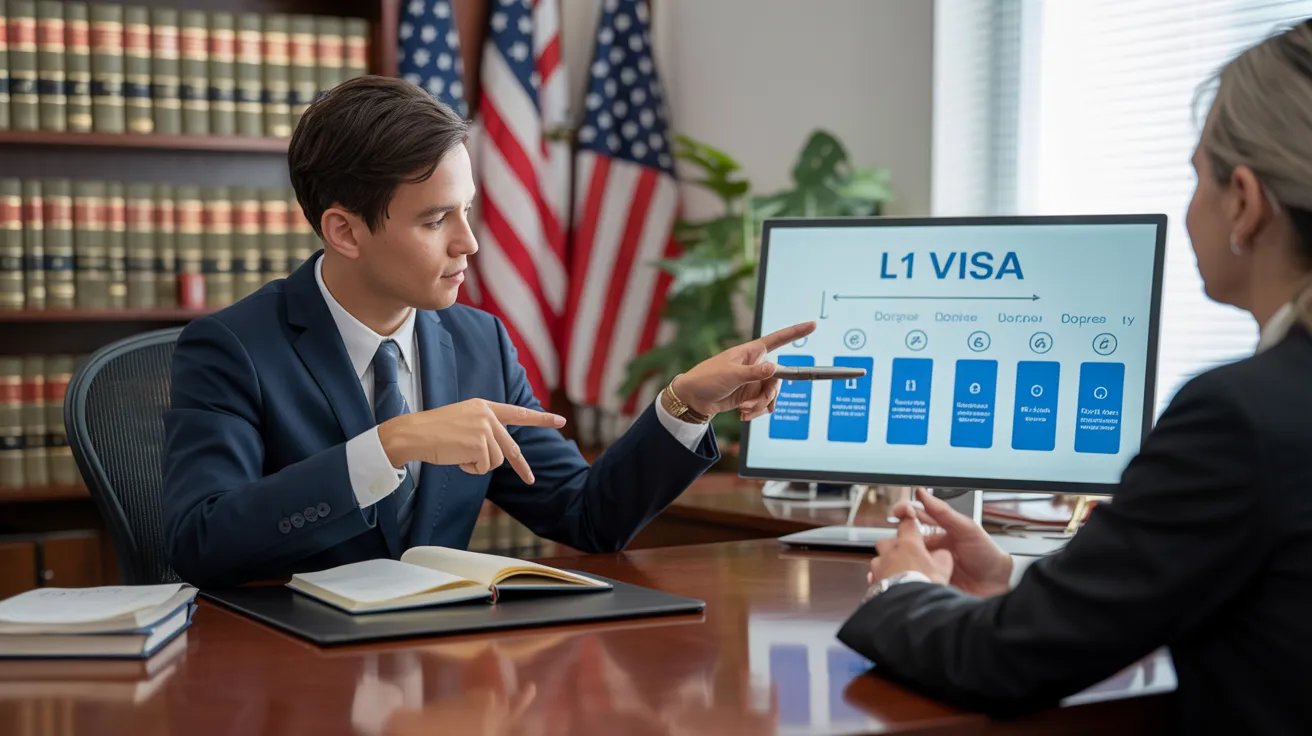
Numerous types of L1 visas satisfy the varied needs of multinational companies wanting to move employees to the United States. The 2 main groups of L1 visas are L1A and L1B, each designed for details roles and duties within an organization. L1 copyright Requirements.The L1A copyright is intended for managers and execs. This category permits firms to transfer individuals that hold managerial or executive placements, enabling them to look after procedures in the U.S. This copyright stands for a first duration of approximately three years, with the possibility of extensions for a total of as much as 7 years. The L1A copyright is particularly valuable for firms looking for to establish a solid management visibility in the U.S. market.On the various other hand, the L1B copyright is marked for workers with specialized knowledge. This includes individuals who possess sophisticated know-how in specific locations, such as exclusive modern technologies or special processes within the company. The L1B copyright is likewise valid for an initial three-year period, with expansions readily available for approximately 5 years. This copyright category is optimal for firms that need workers with specialized skills to improve their procedures and maintain an one-upmanship in the U.S.Both L1A and L1B visas enable double intent, implying that copyright owners can get irreversible residency while on the copyright. Recognizing the differences between these 2 categories is vital for businesses preparing to navigate the intricacies of employee transfers to the USA properly
Eligibility Needs
To get an L1 copyright, both the company and the worker should meet details qualification criteria set by united state immigration authorities. The L1 copyright is developed for intra-company transferees, allowing international firms to move workers to their united state offices.First, the employer has to be a certifying company, which suggests it must have a parent company, branch, subsidiary, or associate that is working both in the U.S. and in the international country. This relationship is crucial for showing that the staff member is being transferred within the same business structure. The company should additionally have been doing service for a minimum of one year in both locations.Second, the staff member must have been used by the international company for a minimum of one continuous year within the three years coming before the application. This work needs to be in a supervisory, executive, or specialized knowledge capacity. For L1A visas, which cater to managers and execs, the staff member should show that they will certainly remain to run in a comparable capability in the U.S. For L1B visas, intended for workers with specialized knowledge, the specific need to possess distinct know-how that adds substantially to the business's procedures.Application Process
Navigating the application procedure for an L1 copyright entails a number of essential steps that need to be completed precisely to ensure an effective end result. The first action is to establish the suitable classification of the L1 copyright: L1A for managers and execs, or L1B for workers with specialized expertise. This difference is significant, as it affects the documents required.Once the group is identified, the united state company need to file Type I-129, Petition for a Nonimmigrant Worker. This type must include in-depth information regarding the company, the staff member's duty, and the nature of the work to be executed in the united state Accompanying documentation generally consists of proof of the connection in between the united state and international entities, proof of the employee's qualifications, and info relating to the job offer.After entry, the U.S. Citizenship and Immigration Services (USCIS) will certainly assess the request. If accepted, the worker will be notified, and they can then get the copyright at an U.S. consular office or consular office in their home country. This involves finishing Type DS-160, the Online Nonimmigrant copyright, and scheduling an interview.During the meeting, the applicant must present various papers, consisting of the authorized Type I-129, evidence of work, and any type of added supporting evidence. Following the interview, if the copyright is given, the worker will certainly obtain a copyright stamp in their copyright, enabling them to enter the U.S. to work for the sponsoring employer. Proper prep work and extensive paperwork are crucial to steering this procedure successfully.Benefits of the L1 copyright
One of the noteworthy advantages of the L1 copyright is its capacity to promote the transfer of vital workers from worldwide workplaces to the United States. This copyright is specifically advantageous for multinational companies seeking to maintain consistency in operations and leadership across boundaries. By allowing execs, supervisors, and specialized workers to work in the U.S., companies can ensure that their most vital skill is readily available to drive service objectives.Another considerable benefit of the L1 copyright is its fairly uncomplicated application procedure compared to various other work visas. Organizations can request for the L1 copyright without the requirement for a labor accreditation, which streamlines the recruitment of foreign employees. The copyright can be approved for a first duration of up to 3 years, with the possibility of expansions, facilitating long-lasting assignments.The L1 copyright additionally gives a path to explore your L1 copyright long-term residency. Workers on L1A visas (for managers and executives) can look for an Eco-friendly Card after one year, accelerating their change to permanent status. This attribute is an attractive motivation for gifted individuals seeking security in the united state workforce.Additionally, L1 copyright holders can bring their immediate member of the family to the united state under L2 standing, allowing spouses and kids to stay and study in the country, improving the overall allure of this copyright group. Overall, the L1 copyright functions as a necessary tool for international businesses, promoting cross-border collaboration and ability movement.Typical Obstacles
While the L1 copyright offers numerous benefits for multinational firms and their staff members, it is not without its difficulties. One noteworthy difficulty is the strict documents and eligibility demands enforced by the U.S. Citizenship and Immigration Services (USCIS) Firms have to offer detailed proof of the international worker's qualifications, the nature of the business, and the certifying connection between the U.S. and international entities. This procedure can be lengthy and might call for lawful proficiency to navigate successfully.Another challenge is the potential for analysis throughout the petition process. USCIS officers may examine the authenticity of the business operations or the worker's role within the company. This scrutiny can result in delays and even denials of the copyright, which can considerably impact the business's functional plans and the worker's profession trajectory.Furthermore, the L1 copyright is connected to the sponsoring employer, which indicates that work adjustments can complicate the copyright standing. If an L1 copyright owner wishes to switch companies, they need to frequently seek a different copyright category, which can include intricacy to their migration journey.Lastly, keeping conformity with L1 copyright policies is important. Companies have to ensure that their employee's duty aligns with the preliminary petition which business remains to fulfill the qualification needs. Failure to do so can lead to abrogation of the copyright, impacting both the employee and the company. These challenges necessitate thorough preparation and recurring administration to ensure a successful L1 copyright experience.Tips for Success
To effectively navigate the L1 copyright procedure, precise prep work is essential. Start by extensively comprehending the specific requirements for the L1 copyright classification you are using for, whether L1A for managers and executives or L1B for staff members with specialized understanding. Gather all necessary documentation early in the procedure, consisting of proof of your work background, organizational structure, and the nature of the business operations.Engage lawful counsel experienced in immigration legislation to direct you through the details of the application. An attorney can aid guarantee that your application is full, accurate, and engaging. They can likewise help in planning for potential demands for proof (RFEs) by proactively resolving locations that might elevate questions.Additionally, maintain clear communication with your employer, that must provide crucial assistance for your application. L1 copyright. Verify that they comprehend their duties, consisting of submitting the essential applications and giving paperwork that substantiates your role in the organization.Prepare for the copyright meeting by exercising solutions to typical questions concerning your expert history and the nature of your employment. Showing self-confidence and quality can considerably affect the result of your applicationFrequently Asked Inquiries
Can Household Members Accompany L1 copyright Holders?
Yes, household members can go along with L1 copyright holders. Partners and single youngsters under 21 years of ages are qualified for L2 visas, which enable them to live and research in the United States throughout the L1 owner's keep.The Length Of Time Can L1 copyright Holders Keep in the U.S.?
L1 copyright owners can at first remain in the U.S. for as much as three years (L1 copyright). This duration might be extended, permitting a maximum remain of seven years for L1A copyright owners and 5 years for L1B copyright holdersIs the L1 copyright a Twin Intent copyright?
Can L1 copyright Holders Look For a Permit?
Yes, L1 copyright holders can look for a permit - L1 copyright. The L1 copyright supports dual intent, allowing owners to seek permanent residency while preserving their non-immigrant standing, facilitating a smoother changeover to an environment-friendly cardWhat Occurs if an L1 copyright Is Rejected?
If an L1 copyright is rejected, the applicant may receive a notification outlining the factors for rejection. L1 copyright Requirements. They can appeal the choice, reapply, or check out different copyright choices depending upon their conditions and credentialsFinal thought
In summary, the L1 copyright functions as a necessary tool for multinational companies seeking to move workers to the United States. Comprehending the distinctions between L1A and L1B categories, along with the eligibility requirements and application procedures, is crucial for successful navigating of this non-immigrant classification. The benefits offered, consisting of structured applications and paths to long-term residency, additionally enhance its appeal. Attending to common obstacles properly can bring about an extra desirable result in the copyright process.Report this wiki page